
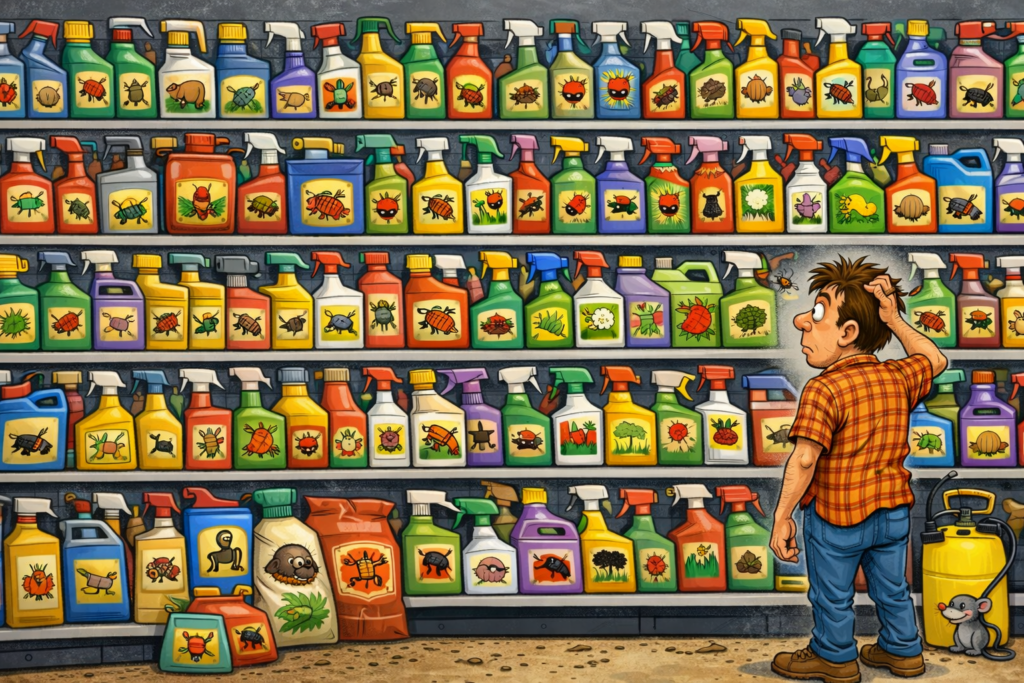
Some products sell themselves. A customer walks in already frustrated. Their plants are damaged. The buds are gone. The landscaping they invested in last season doesn’t look the way it’s supposed to. They’re not browsing — they’re looking for relief, and they’re looking for it now.
That’s a reaction purchase.
And in retail, reaction purchases are familiar territory. They’re driven by urgency and emotion, and they often come with a simple question: What will fix this?
Preventative products, on the other hand, rarely get that advantage. They don’t come with built-in urgency. They require explanation, context, and trust. Which is why they’re often misunderstood — and underestimated — even though they tend to create the strongest long-term customers.
Right now, many customers are arriving after deer damage has already begun. That reality changes the tone of the conversation, but it doesn’t eliminate the opportunity. In fact, it creates one.
This is the moment where the best retailers shift the pitch.
Instead of focusing solely on “fixing” what’s already happened, the conversation expands to what comes next. How to reduce repeat damage. How to protect recovery growth. How to avoid starting the same cycle again in a few weeks or months. The emphasis moves from a single moment to an ongoing approach.
That shift matters.
Customers who only react tend to bounce from solution to solution, often without a clear plan. Customers who understand why the problem occurred — and how ongoing protection works — are far more likely to commit, return, and trust recommendations. They don’t just buy a product; they buy into a strategy.
From a sales perspective, this is where preventative solutions quietly outperform quick fixes. They reframe the purchase from an emergency expense into a smarter, longer-term investment. The conversation becomes less about panic and more about control.
And control is what customers want once the initial frustration settles.
Retailers see this pattern every season. The customers who act early — or who successfully shift from reaction to prevention mid-season — are the ones who come back with confidence. They ask better questions. They plan ahead. And they’re far less likely to abandon a product simply because they didn’t see instant results.
For distributors and retailers, recognizing this behavior is key. Preventative products don’t need to be positioned as a perfect shield or a miracle cure. They work best when presented honestly — as part of a broader, ongoing approach to managing pressure that isn’t going away.
Which brings us to Everguard.
Everguard Repellents were designed specifically for these moments — when customers are already seeing damage, or when they’re trying to stay ahead of what’s coming next. The products fit naturally into conversations about continuity, consistency, and realistic expectations, helping retailers guide customers toward solutions they can rely on, not just react to.