
Every season, homeowners walk into garden centers and hardware stores armed with advice they heard from a neighbor, saw online, or learned from a relative decades ago. Some of those backyard “tips” may have started with a grain of truth — but many have evolved into myths that simply do not hold up against real-world conditions, changing climates, and increasing pest pressure.
For retailers and distributors, understanding these misconceptions is important because customers are often searching for solutions after the myths have already failed.
Here are a few of the biggest backyard myths that may finally need retirement.
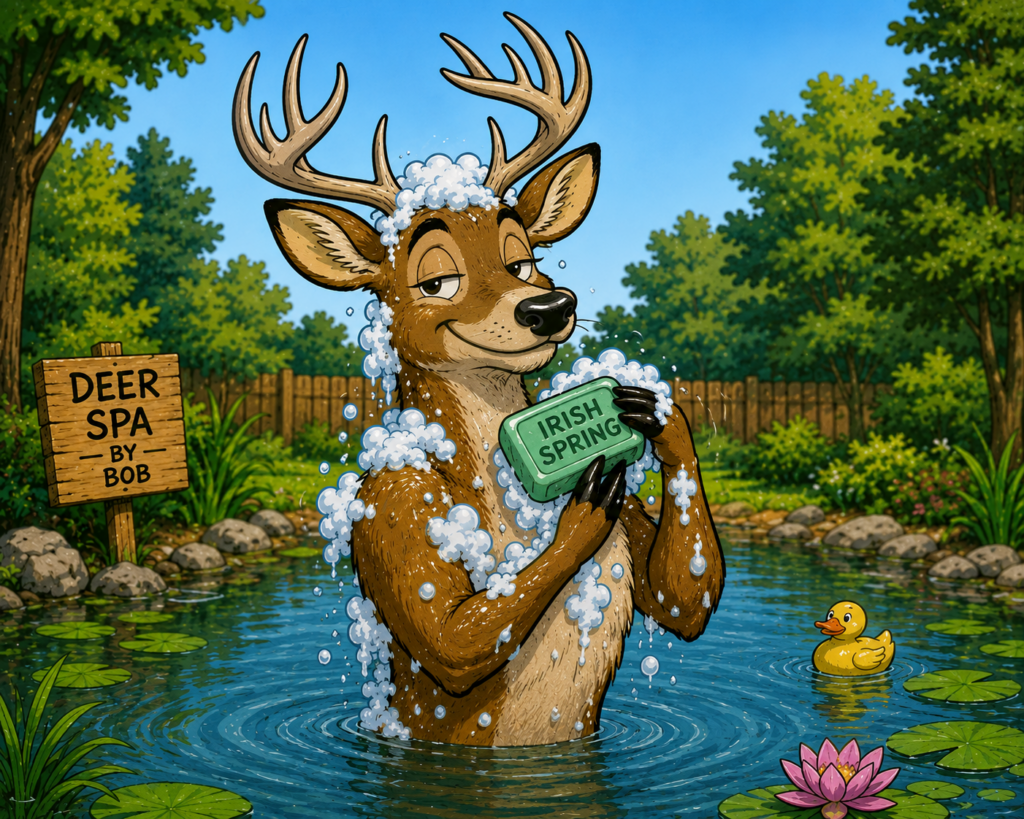
MYTH #1: “Irish Spring soap keeps deer away forever.”
This may be one of the most persistent deer-control myths in America.
The idea likely originated because strong scents can temporarily disrupt deer feeding patterns. Homeowners began hanging bars of soap from trees and shrubs decades ago, especially in rural areas where traditional repellents were harder to find.
The problem is consistency.
Rain, humidity, irrigation, sunlight, and simple weather exposure rapidly reduce the scent strength of soap. Deer are also highly adaptive animals. In areas with heavy browsing pressure, deer often become accustomed to stationary scents surprisingly quickly.
Modern repellents are designed with weather resistance, coverage consistency, and reapplication schedules specifically in mind — something a shrinking bar of soap tied to a branch was never engineered to handle.
MYTH #2: “Deer only eat flowers.”
Many homeowners first notice deer damage on flowering plants, which may explain where this myth began. But deer are opportunistic feeders, especially in suburban and residential environments where natural food sources fluctuate.
In reality, deer consume a wide range of vegetation including:
- Arborvitae
- Hostas
- Vegetable gardens
- Young trees
- Shrubs
- Fruit-bearing plants
- Newly planted landscaping
- Tender spring growth
During drought conditions or periods of nutritional stress, deer become even less selective. Plants often labeled “deer resistant” may still become targets when food competition increases.
Retailers have increasingly reported customers surprised that deer destroyed plants specifically marketed as resistant varieties. Resistance does not mean immunity.
MYTH #3: “Mosquitoes only come out at night.”
This myth likely developed because many mosquito species become most active around dusk. But not all mosquito species follow the same behavior patterns.
Some aggressive daytime-biting mosquitoes are active throughout the day, especially during:
- Humid weather
- Overcast conditions
- After heavy rain
- In shaded landscaping areas
Warm temperatures and standing water can accelerate breeding cycles dramatically. In some cases, mosquito populations can explode within days after storms or periods of excessive rainfall.
This is one reason integrated mosquito management has become increasingly important for homeowners, landscapers, and outdoor commercial properties alike.
MYTH #4: “Cold weather kills ticks immediately.”
Unfortunately, ticks are far more resilient than many people realize.
This misconception likely comes from the assumption that insects disappear once temperatures drop. Ticks, however, are highly adapted survivalists. Many species remain active during surprisingly cool temperatures and can survive winter conditions by insulating themselves under leaves, snow cover, or soil debris.
In fact, milder winters throughout many parts of the United States have contributed to expanding tick populations and longer active seasons.
Homeowners are often shocked to discover ticks on pets, clothing, or landscaping during months they previously considered “safe.”
The Bigger Picture
One of the biggest challenges retailers face today is that weather patterns, pest behavior, and regional growing conditions are changing. Solutions that may have worked casually 20 years ago are often no longer reliable enough for today’s homeowners and commercial property managers.
That is why education matters.
At Everguard Repellents, we continue to focus on helping retailers, distributors, landscapers, and homeowners better understand evolving pest pressures while offering practical, effective solutions designed for real-world conditions.